All Categories
Featured
Table of Contents
For clients, it's a "great time to be releasing capital into these markets," because the mid- to late-stage firms have "a lot more sensible valuations" than startups, Cohen stated."We can in fact also buy shares of business from early-stage investors who are looking to exit their position," he stated.
Considering that companies are far more valuable by the time they do go public or get obtained by other companies, some financiers have the chance to reap big returns in areas like SaaS that "have lower overhead and more rapid growth as they expand the product that they have and raise awareness," he stated."The personal markets have developed to the point that companies no longer require to have an IPO to raise capital," White said.
With fewer openly traded companies and a flourishing private credit market, equity capital investments in the middle to late rounds of financing have actually emerged as a far more unique asset class. Processing ContentMid- to late-stage endeavor capital funds carry much stabler returns and lower failure rates with the possibility of faster liquidity events than investments in start-up companies.
Strategic Expansion Roadmaps for UK Leaders in 2026
As wealth management companies flock into personal capital and other nonpublic alternative investments, one signed up financial investment advisory its 2nd mid- to late-stage endeavor fund this month with a goal of raising $50 million and retail-client-catered investment minimums of $250,000. New York-based is pitching its to the high net worth customers of fellow RIAs due to the fact that the "$2 million and $3 million customer" often has trouble qualifying or paying the fees for those types of private market investments, CEO Sevasti Balafas said in an interview.
Sevasti Balafas is the founder and CEO of New York-based signed up financial investment advisory firm GoalVest Advisory. GoalVest Advisory and venture funds in particular have proven in terms of their returns and, as well as being a location of innovation, and themselves.
The "liquidity timeline" and "risk-return profile" for mid- to late-stage financial investments look much different from start-ups that can have lockup periods for "a prolonged number of years" as business remain personal for a lot longer nowadays, according to Kaidi Gao, an associate venture capital research study expert at data and research study company, a Morningstar company.
"In contrast, later-stage financial investments are safer, since at this point, business have actually currently checked out their products and services, and are focusing on scaling and development. Multiples created from financial investments made to mature services tend to be stabler, but you are much less likely to see outsized returns there.
Navigating Global Trade Outlook for 2026
In between those 2 classifications, they're in the mid- to late-stage. "The business is attempting to expand their reach, their customer base, ramp up sales and marketing and move into success at some point in the future," White said. "Those are the 3 phases that we take a look at purchasing, and there are the advantages and disadvantages of each."The GoalVest item charges a management cost of 1.5% and carried-interest sharing of 15%, compared to the respective standard industry rates of 2% and 20%, and it will buy a similar group of firms to that of the very first fund's approximately 20 holdings that consist of pastry shop chain Insomnia Cookies, defense technology company Shield AI and sales software application, according to Balafas and Blair Cohen, the head of private investments with.
For customers, it's a "great time to be releasing capital into these markets," due to the fact that the mid- to late-stage firms have "a lot more practical evaluations" than startups, Cohen stated."We can actually also buy shares of companies from early-stage investors who are looking to exit their position," he said.
Mid-stage start-ups are operating in an extremely different equity capital landscape in 2026. It's not that funding has actually vanished, however the expectations around it have developed. Investors can be slower to commit, more selective about where dollars go, and focused on real traction over momentum. For creators, this means the bar has been raised.
Instead, expectations are now centered around capital effectiveness, sustainability, and strategic positioning. Adding to the intricacy, local environments are diverging, and funding outcomes are increasingly shaped by sector specialization and local characteristics. Here's how today's mid-stage startups are adjusting, and what founders may wish to bear in mind to remain fundraising-ready in a slower-moving, however still active, market.
In 2021 and 2022, "development at all expenses" was the standard. Creators raised large rounds at sky-high evaluations. But as economic conditions shifted, a number of those boom-era deals are now undersea-- and investor behavior has actually changed in kind. Expectations shifted away from speed and scale and towards operational durability.
Growth Capital Shifts for UK Industries
The average time to close a VC round hit approximately two years, up from about 1.3-1.4 years in 2019. Investors became more selective, looking for start-ups with strong money circulation, solid system economics, and the capability to do more with less. For mid-stage start-ups, this shift might imply principles come.
Is Your British Firm Prepared for 2026 Digital Mandates?While offers are still taking place, they're taking longer, and the bar to follow-on funding has actually increased a shift we checked out in our breakdown of 3 crucial fundraising trends to enjoy. For mid-stage startups, the ramification can be clear: momentum alone won't always suffice. Financiers wish to see a clear focus on the principles, consisting of: Capital performance: Doing more with less Runway management: Having enough money to stay versatile, particularly provided today's extended fundraising timelines Operational rigor: Clear metrics, lean groups, and clever spend Startups with inflated valuations can now be under greater pressure to prove traction and validate their prices.
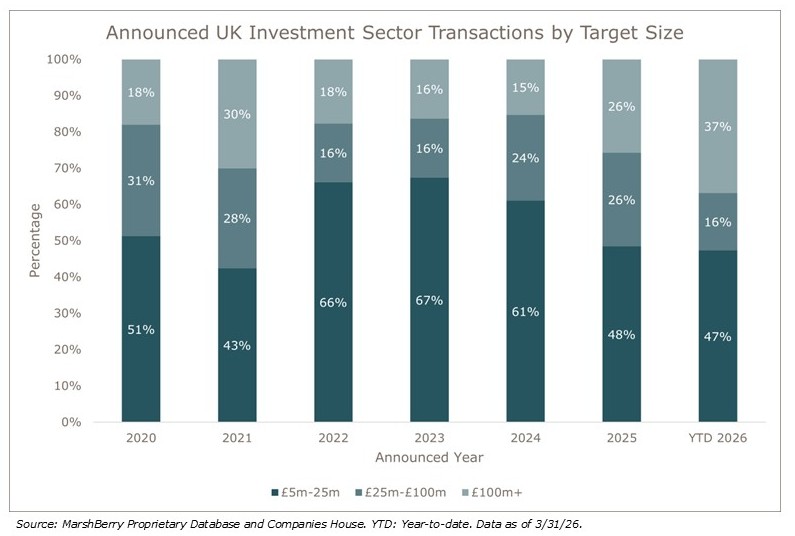
At the very same time, due diligence has been getting much deeper. Financiers are generally investing more time validating monetary discipline, product-market fit, and defensibility before composing checks. Founders preparing for a fundraise might wish to review what today's due diligence process truly looks like this list can help. With typical fundraising timelines now extending to approximately two years, capital has been flowing toward start-ups with strong principles and long lasting competitive advantages-- not simply growth stories.
Startups deal with a moving set of expectations and an endeavor capital landscape that's progressively varied. Pulling from our Endeavor Capital Report in collaboration with Pitchbook, in 2026, five key patterns are forming where capital flows and how long it might take to raise: AI accounted for almost half of all United States VC offer value and almost a 3rd of deal count in 2024.

Latest Posts
Navigating the 2026 British Business Landscape
Corporate Management Pillars for a 2026 Market
Top Benefits of Global Worker Acquisition